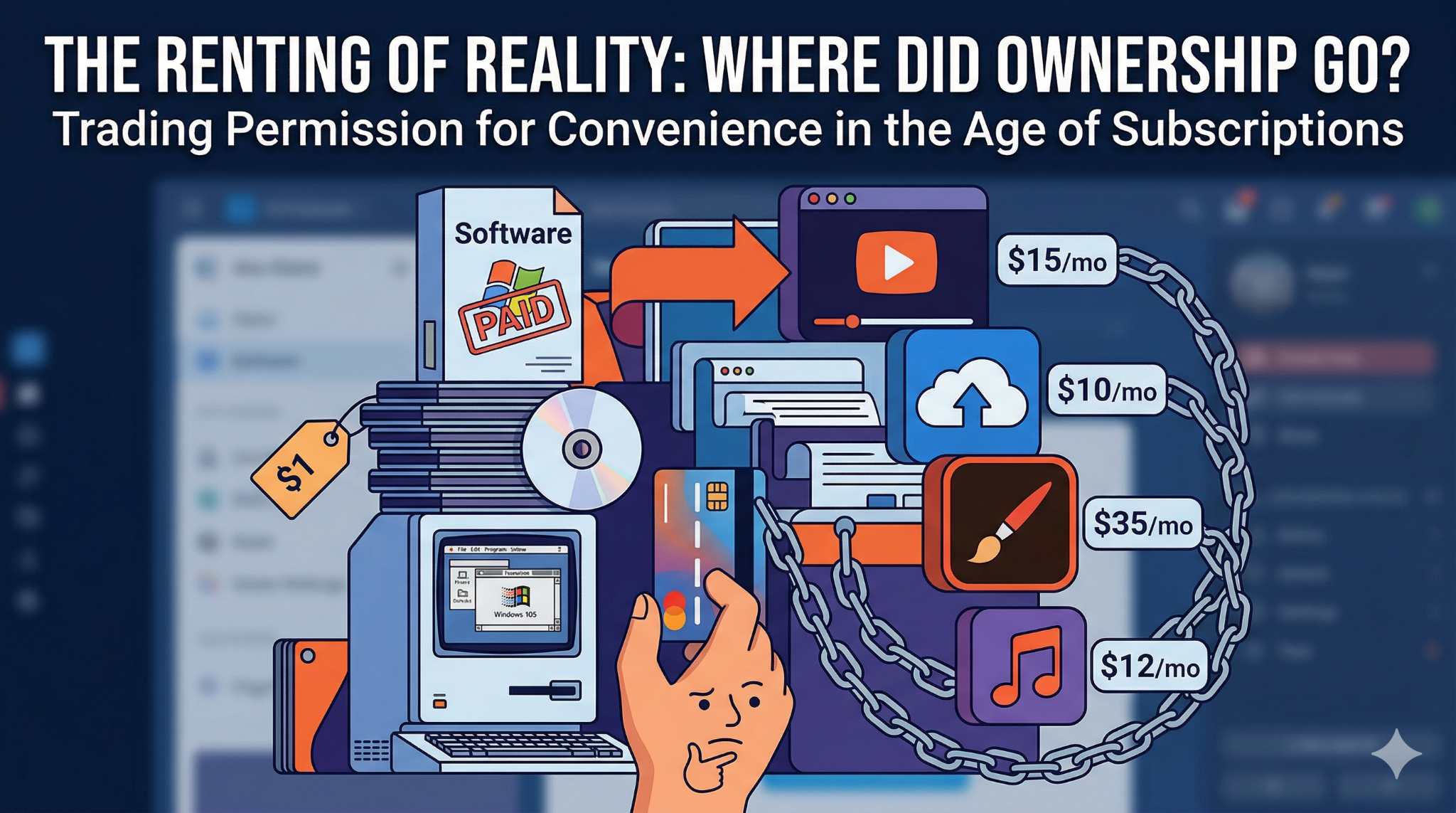
After seeing the blogs I have been posting, a friend sent his Substack post this week. His post is about how we have stopped owning things, and most of us barely reacted. It started with software. That made sense, at least on the surface. Pay a little each month, always have the newest version, get updates, get cloud access, get support. That model however did not stay in software. Storage, creative tools, streaming, productivity apps, and now even physical products and everyday services are subscriptions. More and more of modern life is built around monthly payments. You can even pay a subscription for an app to manage your subscriptions.
The weird part is how normal it feels. Not that long ago, buying something meant it was yours. You paid once and kept it. You could use it for as long as it worked. You could keep an old version running on an old machine if that was good enough for you. Now a lot of the things we rely on are not really ours at all, and we are just paying for access.
The reason this model works so well is because it does not feel expensive. Fifteen dollars a month does not sound scary but stack enough of those together and suddenly you are spending a huge amount every year on things you do not even think about anymore.
To be fair, subscriptions are not inherently bad. They can make tools more accessible, fund updates, better support, and ongoing development. There are cases where they genuinely make sense. However, we have been so focused on convenience that we have ignored what we traded away to get it. We traded ownership for permission.
You do not always control access to your own work. You cannot guarantee a service will stay affordable, stay available, or even stay around at all.
Discover more from Shayan Hosseini
Subscribe to get the latest posts sent to your email.

Hey Shayan,
The fact that you subtly point out ownership is key for me. Most of us swapped it for ease of use without really considering the trade. Each purchase, subscription or service payment in my case, feels less important on its own. What bothers me, actually, more than money, is when access disappears without really having been given me in the first place.
If HBOGO/Now would go offline, the movies would be lost forever. No hard disk, digital file, it doesn’t matter what they say. The real takeaway i get from your post is that while many convenience services have been embraced, there’s always a price and this “permissive” on-demand world might be costing us something important we once took for granted.